
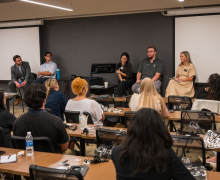
NCACPA Bridge Day connects business students with accounting professionals
Oct 4, 2026
More than 30 students gathered at Appalachian State University’s Hickory campus on Sept. 18 for the inaugural NCACPA Bridge Day, a professional development event designed to help aspiring...
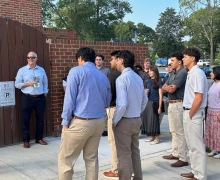
Martha Guy Fellows visit Cary, gain insight into community development
Sep 30, 2026
Members of Appalachian State University’s Martha Guy Business for Good Fellows recently visited Cary, NC, for a behind-the-scenes look at the partnerships that transformed downtown Cary and...

Military Student Spotlight: Cybersecurity, CIS Major Nick Morgan
Sep 16, 2026
From serving aboard submarines in the U.S. Navy to pursuing two degrees at Appalachian State University, separated STS2 (E-5) Nicolas “Nick” Morgan has brought the focus, resilience, and...

Bank Day connects App State business students with banking leaders
Sep 11, 2026
More than 150 Appalachian State University students connected with banking professionals during Bank Day on Sept. 9 in Peacock Hall, creating...

App State economists examine the profitability of contact lenses in eye care practices
Sep 3, 2026
Appalachian State University Professors of Economics Dr. Ash Morgan and...

Mountaineer Moves: Business NC highlights alum's new tourism leadership role
Sep 1, 2026
Walker College of Business alum Jesa McNeill-Valle ’17 was recently...

Molina named inaugural Stephenson Family Distinguished Scholar
Aug 25, 2026
The Walker College of Business has named Dr. Renato Molina the inaugural...

Eller appointed Kenneth E. Peacock Professor of Accounting in the Walker College
Aug 25, 2026
The Walker College of Business has named Dr. Kevin Eller the Kenneth E. Peacock Professor of Accounting, recognizing his longstanding...
Walker College welcomes new faculty, staff, leadership for Fall 2026 semester
Aug 24, 2026
The Walker College of Business welcomes 15 new faces as faculty and staff members for the fall term.

5 App State faculty members appointed to Partners in Excellence Professorships in the Walker College, 6 re-appointed to second terms
Aug 21, 2026
Five faculty members at Appalachian State University have been appointed to professorships in the Walker College of Business, and six have been...

App State named a business education leader in US and worldwide for 2026–27
Aug 21, 2026
BOONE, N.C. — Cementing its reputation as a leader in business education, Appalachian State University enters the 2026–27 academic year with top...

App State fundraising reaches historic heights, expands support for Mountaineers
Aug 19, 2026
Giving topped $50 million in both fiscal year 2025 and fiscal year 2026
BOONE, N.C. — With the close of fiscal year 2026 on...

App State honors 8 faculty and staff with Sywassink Awards for Excellence
Aug 4, 2026
New to this year’s awards — the Sywassink Legacy of Excellence Award